Direct answer: Deep-set eyes do not automatically need a smaller, larger or more upright lash lift shield. The practical fitting issue is clearance: the eye sits relatively farther back beneath the brow area, so the shield base, upper edge and planned lash direction need enough room to work without being crowded by the upper lid or brow bone. Dry-fit two realistic options before treatment, check center and corner stability, then test a small clean lash section without lotion. Choose the profile that gives controlled root direction, enough surface for the full lash length and stable placement without excessive tension.
Deep-set eyes can make shield selection more demanding because the lashes, mobile lid and brow area have a different three-dimensional relationship than they do on a flatter eye area. The goal is not to “correct” the eye shape. It is to choose a lash lift pad or shield that fits the available space and supports clean lash placement.
This guide focuses on deep-set-eye shield fitting: base height, working profile, lash reach and clearance. For general XS–XL selection, use the YSEN’S Lash Lift Pad Size Guide as the parent guide.
What Deep-Set Eyes Change in Lash Lift Fitting
In everyday beauty terminology, deep-set eyes appear to sit farther back beneath the brow area. For a lash artist, the useful question is the available working space around the lash line.
Deep-set is not the same as hooded
A deep-set eye can have a visible mobile lid, a hooded fold, or both. Hooded-eye fitting is mainly affected by the fold; deep-set fitting often needs extra attention to shield height and brow-area clearance. If both features are present, also review Lash Lift Pads for Hooded Eyes.
Natural lash direction is a separate variable
Deep-set eyes can have downward-, forward- or upward-growing lashes. If the roots point downward, the artist may need more controlled redirection before the lashes lie cleanly on the working surface. See Lash Lift Pads for Downward-Growing Lashes.
Four Variables to Check Before Choosing a Shield
1. Base height
A shield can have the right nominal size but still feel bulky if its base sits high on the available lid space. Compare the real side profile rather than relying on S, M or L alone.
2. Upper-edge clearance
The shield should remain stable rather than being pushed, twisted or compressed by nearby lid or brow contours.
3. Lash reach and tip space
The roots should reach the working surface without excessive pulling, and long lash tips need enough usable area.
4. Inner- and outer-corner fit
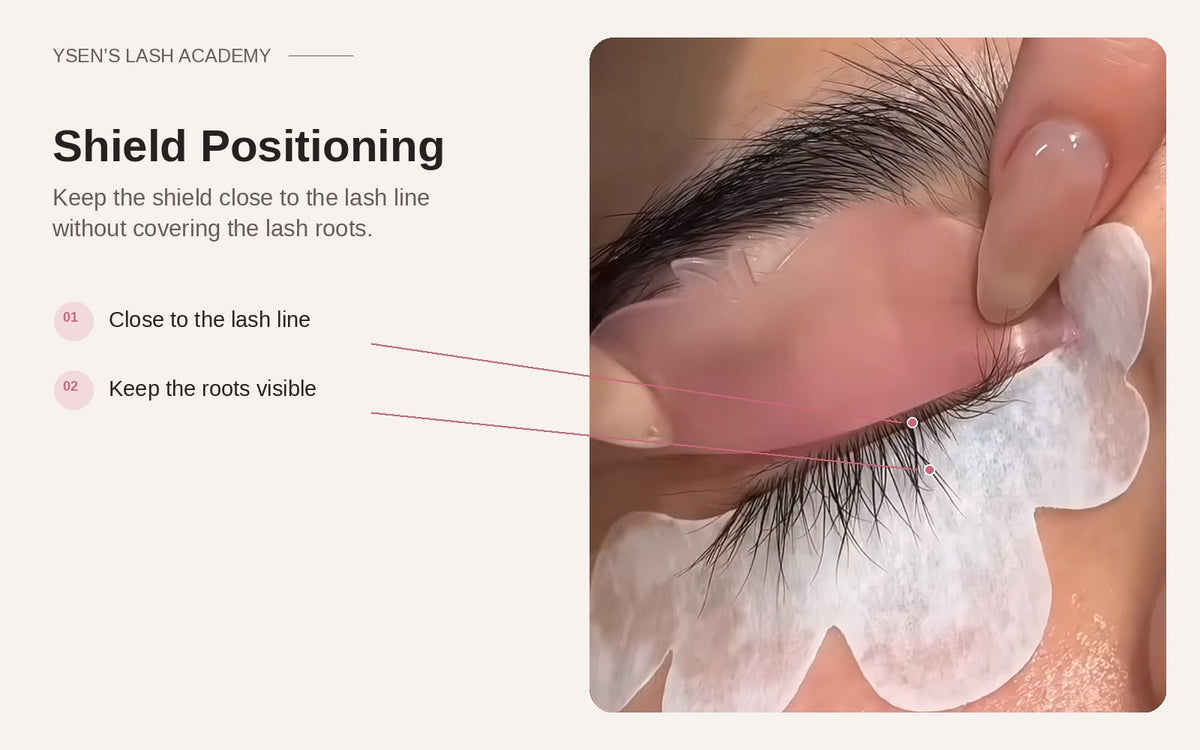
The center can sit well while one corner floats. A corner that only stays down while held with a finger has not passed the fit check.
What Is the Best Lash Lift Shield for Deep-Set Eyes?
There is no universal best size. The best starting shield creates a stable base and practical working surface while leaving enough room for the lash length and planned direction. Compare the actual base and profile within the YSEN’S Lash Lift Pads, Shields & Rods Collection rather than treating a size label as a fixed rule.
How to Dry-Fit Lash Lift Pads on Deep-Set Eyes
Step 1: Assess clean natural lashes
Check lash length, root direction, density, corner behavior and differences between the two eyes before lotion or full lash fixation.
Step 2: Choose two realistic candidates
Select neighboring sizes or two different profiles that could plausibly work. Do not force the first option to fit.
Step 3: Dry-fit on the closed eye
Place the clean shield according to its instructions, close to the lash line without sitting on the waterline or touching the eye. Check center, inner corner and outer corner.
Step 4: Check height and surrounding clearance
If nearby contours repeatedly push the shield out of position, compare another design rather than compensating with stronger fixation.
Step 5: Test a small clean lash section
Without treatment lotion, bring a few clean lashes onto the working surface. Watch the roots, not only the tips. The shield should stay stable while the lashes are redirected.
Step 6: Check separation and full-length space
Confirm that lashes can be arranged without crossing or crowding and that the tips do not run out of working surface.
Step 7: Compare the second candidate
Compare stability, root access, working length and clearance. The better fit is the one that balances all four—not necessarily the smaller shield.
Step 8: Assess the second eye independently
Lid contour, eye depth and lash length can differ from side to side.
Step 9: Process only after fit is stable
Then follow the directions, warnings and timing guidance for the specific lash lift system. Eye shape alone is not a reason to extend processing time.
Smaller, Larger or More Upright?
Smaller shields may help short lashes reach the surface, but can give long tips less room. Larger or gentler profiles may provide more working length for long lashes, but the base still has to fit securely. More upright profiles generally direct lashes upward earlier from the root, while rounded profiles generally create a more visible arc. Hybrid profiles sit between those tendencies. These are shape tendencies, not guaranteed results.
Deep-Set vs Hooded vs Downward-Growing
- Deep-set eyes: prioritize three-dimensional clearance and shield height.
- Hooded eyes: prioritize the eyelid fold and usable mobile-lid space.
- Downward-growing lashes: prioritize root redirection and lash reach.
A client can have more than one feature. Combine the checks instead of applying one size rule.
Self-Adhesive, Grooved and Smooth Shields
Surface style and base design are separate from size. The YSEN’S Self-Adhesive Lash Lift Shields – 12PCS use a smooth curved working surface, while the YSEN’S Grooved Self-Adhesive Lash Lift Shields – 8PCS add guide grooves for organization. Choose by actual fit and workflow rather than assuming one surface is universally better for deep-set eyes.
If a compatible workflow uses a placement balm, YSEN’S Lash Lift Glue Balm can support lash-to-shield placement after the shield fit has been confirmed. Balm should not hide a base, width or centering problem.
Korean-Style Lash Lift Technique
In Korean-style lash lift techniques, artists may place particular emphasis on controlled root direction and the working profile selected for the desired styling direction. The same fitting rule applies: the shield must suit the client’s actual lid contour, lash length and clearance. “Korean-style” describes a technique or styling approach here; it does not describe where the shield was manufactured.
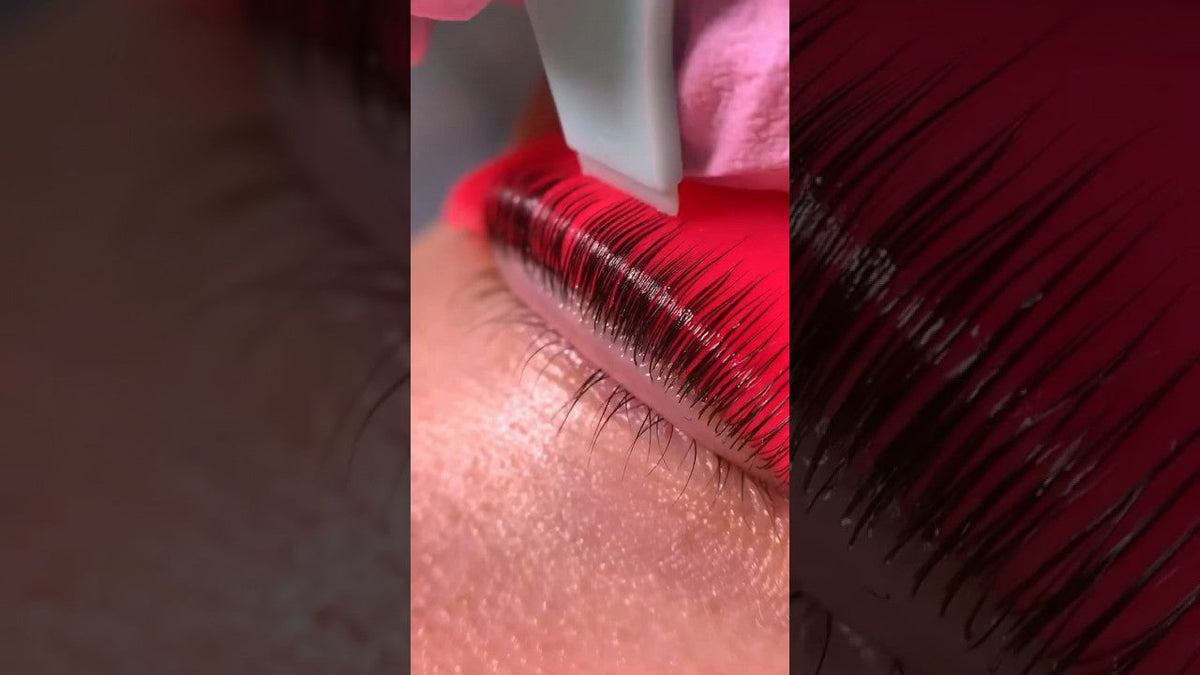
Video: YSEN’S Lash Lift Pad & Shield Size Guide
Use this official YSEN’S video as a visual companion when comparing shield sizes and profiles. For deep-set eyes, add the clearance checks in this guide to the general sizing process.
Common Fitting Mistakes
- Automatically sizing down because the eye looks compact beneath the brow.
- Ignoring base height and surrounding clearance.
- Holding down a lifting corner and calling it a successful fit.
- Adding more balm or adhesive before checking width, curvature and centering.
- Pulling lashes sideways to make them reach.
- Changing processing time to compensate for a placement problem.
If a shield repeatedly moves during placement, review How to Keep Lash Lift Pads in Place before increasing fixation product.
Deep-Set-Eye Fit Checklist
- Observe lash length and root direction.
- Check practical lid and brow-area clearance.
- Select two plausible sizes or profiles.
- Dry-fit the first shield on the closed eye.
- Check inner corner, center and outer corner.
- Check base height and upper-edge clearance.
- Test a small clean lash section without lotion.
- Confirm enough surface for the full lash length.
- Compare the second candidate.
- Assess the other eye separately.
- Proceed only when fit and placement are stable.
Frequently Asked Questions
What size lash lift shield is best for deep-set eyes?
There is no universal size. Choose by eyelid fit, base height, lash reach, corner stability and working-surface clearance.
Should I automatically use a larger shield?
No. A larger or gentler profile may give long lashes more room, but it still needs to fit the lid securely.
Is a more upright shield better?
Not automatically. Compare it with rounded or hybrid options and choose the best combined fit and styling direction.
Why does a shield move on a deep-set eye?
The base may not match local curvature, the shield may be too tall or wide, a corner may be misaligned, or the lashes may be pulling against it during placement.
Can self-adhesive shields help?
They can be useful when the base suits the individual lid and the skin is prepared according to product directions. Self-adhering grip does not replace correct size and profile selection.
Do deep-set eyes need a different processing time?
Eye shape alone is not a reason to change processing time. Follow the instructions for the specific system.
Can the two eyes need different shields?
Yes. Lid contour, eye depth, lash length and growth direction can differ between sides.
Related YSEN’S Lash Academy Guides
- Lash Lift Pad Size Guide
- Lash Lift Pads for Hooded Eyes
- Lash Lift Pads for Downward-Growing Lashes
- How to Keep Lash Lift Pads in Place
Conclusion
For deep-set eyes, successful shield selection is mainly a clearance-and-fit problem—not a fixed size rule. Compare the actual base height and profile, dry-fit before processing, test a small clean lash section and choose the option that stays stable while giving the lashes enough room to be directed and separated cleanly.
Author: YSEN’S Beauty Education Team
Educational note: This content is for professional education and product-selection support. Always follow the directions, warnings and training requirements for the specific lash lift products and tools used.


Leave a comment
This site is protected by hCaptcha and the hCaptcha Privacy Policy and Terms of Service apply.