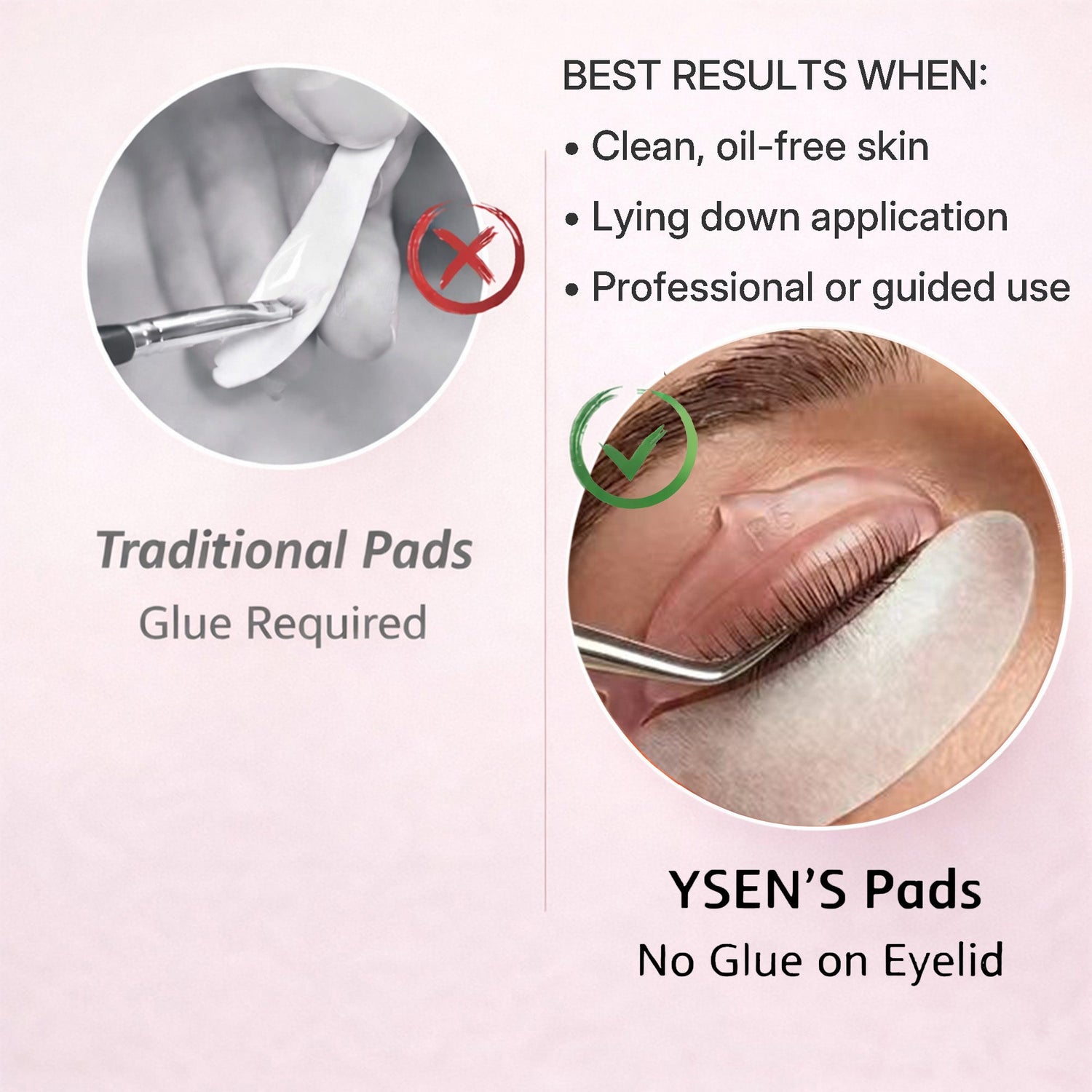
You do not need to replace a rod simply because another pad is marketed as Korean. Keep a tool that fits the client, supports the intended direction and is compatible with the treatment system. Consider another shape when it solves a specific fitting or styling problem.
This guide helps you decide whether a change is useful. For the detailed differences between rods, shields and Korean pads, see the three-way shape comparison.
Compare the Shape, Not the Trend
A rounded rod usually guides lashes over an arc. A more upright shield can place greater emphasis on root direction. Korean pads vary: some are shaped lifting forms, while others serve a particular treatment stage. These names do not establish a universal hierarchy of comfort, quality or natural-looking results.
Inspect the actual side profile, width, working surface and intended use. A flexible pad can still fit poorly, and a traditional rod can still provide the result a client wants.
Should You Keep the Rod or Add a Pad?
| Your situation | Useful next step |
|---|---|
| The rod fits securely and gives the intended rounded result | Keep it as an option. A new category is not necessary for its own sake. |
| You want a different root direction or curve | Compare actual profiles and dry-fit an alternative before deciding. |
| The pad lifts at the corners | Review width, base curvature and alignment; changing category alone may not solve the problem. |
| The lash tips exceed the intended working area | Compare a larger working surface in a suitable design. |
| You are adopting a different treatment system | Use the form specified for the relevant stage and verify fixation requirements. |
What to Compare Before Buying
- Purpose: identify the result or fit problem you want to address.
- Shape: compare the side profile and base rather than relying on the product name.
- Size range: check whether the alternative offers useful working space or width that your existing range lacks.
- Fixation: check pad-to-eyelid and lash-to-pad requirements separately.
- Care: review the particular product’s cleaning, reuse and replacement instructions.
Use the size and dry-fit guide when comparing neighbouring sizes. If instability is the main difficulty, start with keeping pads in place.
Watch the Pad Demonstration
This demonstration shows pad use. It is not a controlled comparison proving that pads outperform rods.
Two Example Buying Decisions
These are hypothetical examples for planning a tool range.
An artist already has a useful rounded-rod range: an additional shape may be worth comparing for a styling direction or eyelid fit the current range does not cover. Replacing every size would add cost without first identifying that need.
An artist is moving to a stage-specific workflow: follow the system’s pad requirements. A flat preparation pad should not be treated as an interchangeable substitute for every shaping stage.
Frequently Asked Questions
Which gives a more natural result?
Natural-looking is a styling goal rather than a product category. The visible result depends on the starting lashes, selected shape, placement and treatment system. Neither category guarantees it.
Are Korean pads more comfortable?
Comfort cannot be established from the label. The actual material, edge shape, width and positioning need to suit the eyelid.
Does self-adhesive mean no balm is required?
It may describe how the pad grips the eyelid. Check separately whether the lashes require a compatible placement product.
How many shapes should I buy?
Build a range around the fitting and styling needs you encounter. Add a size or profile for an identified gap rather than buying every available design.
Compare Your Next Tool
Browse the current YSEN’S pads, rods and shields with your missing size or profile in mind. Keep the complete treatment instructions available when assessing a new form.
Author: YSEN’S Beauty Education Team



Leave a comment
This site is protected by hCaptcha and the hCaptcha Privacy Policy and Terms of Service apply.