
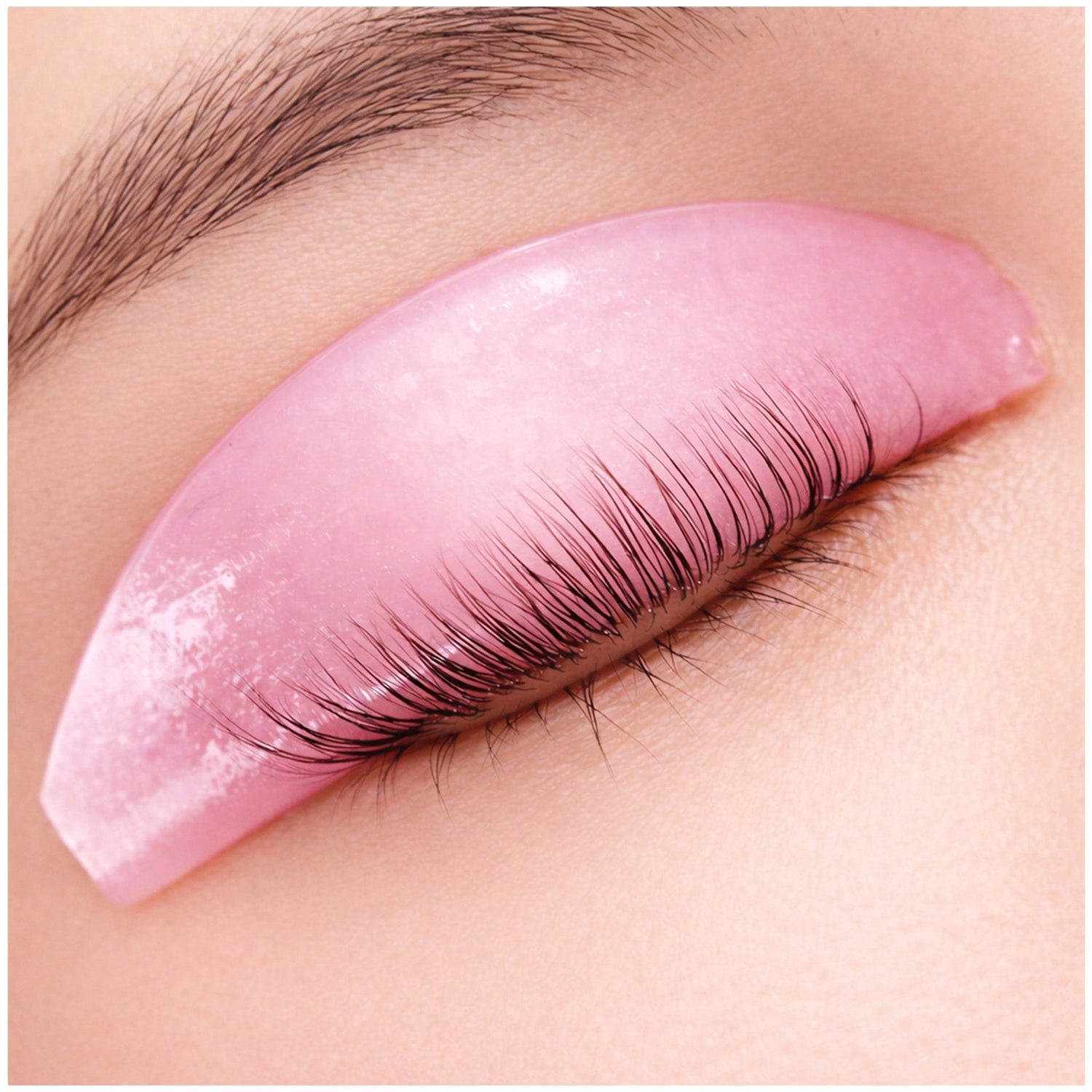
Direct Answer: Choose lash lift pads by checking the natural lash length, eyelid fit, pad curve and intended styling direction—not by size name alone. Smaller pads generally create a tighter curve and suit shorter lashes, while larger pads provide more space for longer lashes and usually create a gentler curve. Always dry-fit the pad and follow its product-specific directions before starting.
Key Takeaways
- Natural lash length is the starting point, but it is not the only factor.
- Smaller pads generally create a tighter curve; larger pads generally create a gentler curve.
- Pad fit can also be affected by eye shape, eyelid space and natural lash direction.
- Size labels are not standardised across every brand or pad design.
- Dry-fit more than one size before applying lotions.
- Self-adhesive pads may attach to the eyelid without adhesive, but the lashes may still require a compatible adhesive or balm.
- Always follow the directions for the specific pads and lash lift system being used.
What Are Lash Lift Pads?
Lash lift pads are shaped tools placed on the eyelid during a lash lift service. Natural lashes are arranged over the pad so that the pad’s shape helps guide the direction and curve of the finished lift.
They may also be described as:
- Silicone pads
- Lash lift shields
- Lash lift rods
- Korean lash lift pads
- Flat shields
- Hybrid shields
These terms are sometimes used interchangeably, but the products do not always create the same styling direction.
A rounded rod usually encourages a more curved result. A flatter or more upright shield may emphasise lift from the root. Hybrid designs combine features of rods and shields. Because brands use different shapes and sizing systems, always assess the actual pad rather than relying only on its name.

What Determines the Right Lash Lift Pad?
The right pad should accommodate the natural lashes without forcing the tips too far beyond the working curve. It should also sit securely on the eyelid and provide enough space for controlled lash placement.
Consider the following factors.
1. Natural Lash Length
Natural lash length is the most useful starting point.
- Short lashes generally require a smaller pad.
- Medium-length lashes often suit a medium size.
- Long lashes usually require a larger pad.
- Very long lashes may need an XL size or a design with a larger working surface.
Using a pad that is too small may cause the lash tips to extend beyond the intended curve. A pad that is too large may produce less visible lift than expected.
2. Pad Curve
Two pads with the same size label can have different curves.
A smaller, more strongly curved pad will generally create a tighter curl. A larger or flatter pad usually creates a softer, more open lift.
Before choosing, ask:
- Does the intended look require a tighter curve or a gentler lift?
- Are the natural lashes straight, downward-growing or already curved?
- Is there enough clearance between the lifted lashes and the upper eyelid or brow area?
Pad selection should support the intended direction without causing the lashes to curl back toward the eyelid.
3. Eye Shape and Eyelid Space
The pad should follow the eyelid comfortably without lifting excessively at the inner or outer corner.
Check:
- The width of the eye
- The amount of visible eyelid space
- Whether the eyelid is flat, rounded, hooded or deep-set
- Whether the inner and outer corners remain stable
- Whether the lifted lashes will have sufficient clearance
Eye shape does not automatically determine one specific size, but it can affect which pad shape sits most securely.
4. Natural Lash Direction
Downward-growing lashes may require a different pad shape from lashes that already grow upward.
The goal is not simply to choose the smallest available pad. Instead, select a shape that allows the lashes to be arranged smoothly from the root without crossing, twisting or crowding.
5. Lash Placement Area
Different brands use different fitting guidelines. Some systems expect the lashes to pass the middle of the pad’s curve, while others use a point closer to three-quarters of the working surface.
There is no single measurement that applies to every pad.
Use the instructions supplied with the specific product and check that:
- The lashes reach the intended working area.
- The tips do not extend excessively beyond the curve.
- The lashes can be separated without overlapping.
- The roots are visible and accessible for controlled product placement.
YSEN’S Korean Lash Lift Pad Size Guide
Where a YSEN’S Korean pad design is offered in XS–XL, use the following table as a general starting point.

| Pad Size | General Lash-Length Starting Point | Relative Curve | Typical Styling Direction |
|---|---|---|---|
| XS | Short lashes | Tightest curve | More pronounced curl |
| S | Short to medium lashes | Tighter curve | Defined lift and curl |
| M | Medium-length lashes | Balanced curve | Balanced lift |
| L | Medium to long lashes | Softer curve | More open, gradual lift |
| XL | Long lashes | Gentlest curve | Softer lift with more length space |
This table is a general guide rather than a guaranteed result. Eye shape, natural lash direction, pad design, lash placement and product application can all influence the finished appearance.
Shop YSEN’S Korean Lash Lift Pads
How to Choose Lash Lift Pads Step by Step
Step 1: Assess the Natural Lashes
Before selecting a pad, look at:
- Lash length
- Lash density
- Natural growth direction
- Existing curl
- Differences between the inner, middle and outer lashes
Do not assess only the longest lashes in the centre. The pad must also accommodate the shorter inner and outer lashes.
Step 2: Start With the Most Likely Size
Use natural lash length to choose an initial size.
For example:
- Start with XS or S for short lashes.
- Start with M for medium-length lashes.
- Start with L or XL for long lashes.
This is only the first fitting option, not the final decision.
Step 3: Dry-Fit the Pad
Place the clean pad on the eyelid without applying treatment lotions.
Check whether:
- It follows the lash line.
- The inner and outer corners sit securely.
- It is appropriately sized for the available eyelid space.
- The natural lashes can reach the intended part of the curve.
- The lash tips remain within the usable styling area.

Compare the neighbouring size if the fit is uncertain.
Step 4: Lift a Few Lashes Onto the Pad
Gently position a small section of clean lashes over the pad to check their reach.
If the lash tips extend too far beyond the working curve, consider a larger size. If the lashes do not reach the intended shaping area, consider a smaller size or a different pad design.
Do not apply chemical products during this fitting check.
Step 5: Check the Intended Styling Direction
Confirm whether the selected pad is likely to provide:
- A tighter curl
- A balanced lift
- A softer, more open lift
- More root elevation
- More gradual curvature
If the curve is unsuitable, changing the pad shape may be more useful than changing only the size.
Step 6: Confirm Adhesive Requirements
Check the individual product directions.
Some pads are designed to adhere to the eyelid without adhesive on the back. However, an adhesive or glue balm may still be required to hold the natural lashes on the pad.
Do not assume that “self-adhesive” or “glue-free” means no adhesive is used anywhere in the service.
Shop YSEN’S Lash Lift Glue Balm
Step 7: Record the Selection
Professional lash artists can record:
- Pad brand and design
- Size used
- Natural lash length and direction
- Fit observations
- Intended styling direction
This makes future product selection more consistent, although the lashes should still be reassessed at every appointment.
Lash Lift Rods vs Shields vs Korean Pads
| Product Type | General Shape | Common Styling Direction | Selection Consideration |
|---|---|---|---|
| Rod | Rounded | More visible curvature | Lash length and curve diameter |
| Shield | Flatter or more upright | Root-focused lift | Eyelid fit and lash clearance |
| Hybrid shield | Rounded base with an upright section | Combined lift and curve | Lash direction and intended shape |
| Korean pad | Varies by system; may be flat, grooved or self-adhesive | Depends on the selected design and technique | Product-specific directions are essential |
“Korean lash lift pad” describes a category of pad designs rather than one universal curve. Compare the actual shape, size range, grooves, adhesive requirements and intended use before purchasing.


Common Lash Lift Pad Selection Mistakes
Choosing Only by the Size Label
A medium pad from one collection may not match a medium pad from another. Compare the physical curve and usable surface.
Automatically Choosing the Smallest Pad
The smallest pad does not automatically produce the best lift. If it is too small, the lash tips may extend beyond the intended curve or curl back toward the eyelid.
Ignoring Eye Shape
A pad may suit the lash length but still lift at the corners or sit poorly on the eyelid.
Using the Same Size for Every Client
Natural lash length, growth direction, eye shape and intended styling direction vary. Pad choice should be reassessed for each service.
Assuming Self-Adhesive Means Adhesive-Free
A self-adhesive pad may attach directly to the eyelid, but the natural lashes may still need a compatible adhesive or balm.
Mixing Instructions From Different Systems
Pad fitting, lotion placement and application procedures can differ between brands. Follow the directions supplied with the specific pads and formulas being used.
Selecting Processing Time From the Pad Size
Pad size does not determine processing time. Follow the instructions for the lash lift lotions and assess suitability according to the product system.
Practical Fitting Tips
- Keep neighbouring sizes available during the fitting stage.
- Compare shape as well as size.
- Check the inner and outer corners before committing to the pad.
- Separate the lashes evenly without crossing or crowding.
- Do not stretch or trim a pad unless its instructions permit it.
- Use clear before-and-after photographs only with appropriate customer consent.
- Review the product page and label whenever switching to a new pad design.
Safety and Responsible Use
Lash lift pads are used close to the eyes and may be combined with adhesives and chemical treatment formulas.
Before use:
- Read the full directions and warnings for every product in the system.
- Confirm whether the product is intended for professional or personal use.
- Do not use a product marked for professional use without appropriate training.
- Follow all product-specific sensitivity-test or patch-test directions.
- Avoid treatment when the eye area is irritated, injured or affected by an unexpected condition.
- Avoid direct eye contact with adhesives and treatment formulas.
- Stop the service if irritation or an unexpected reaction occurs.
- Keep products out of reach of children.
- Clean, disinfect or dispose of accessories according to their instructions.
- Do not reuse products labelled as disposable.
A pad size guide cannot replace the product label, manufacturer directions or appropriate professional training.
Related YSEN’S Products
Korean Lash Lift Pads
Compare self-adhesive pads, grooved shields, rods, lower-lash shields and different size options.
Lash Lift Glue Balm
Explore balm-style adhesive options for controlled lash placement. Check the specific pad and adhesive directions before combining products.
Lash Lift Kits
Compare complete systems and check which pads, lotions and tools are included before ordering.
Professional Lash Lift Tools
Explore combs, brushes, mirrors, paper strips and other accessories used during lash preparation and placement.
Frequently Asked Questions
What Size Lash Lift Pad Should a Beginner Use?
There is no single size that suits every beginner or every set of lashes. Start with the natural lash length, dry-fit the most likely size and compare the neighbouring size. Follow the fitting directions supplied with the specific pad.
Do Smaller Lash Lift Pads Create a Stronger Curl?
Smaller pads generally have a tighter curve and can create a more pronounced curl. However, the finished result also depends on pad design, lash placement, natural lash direction and correct use of the treatment system.
Which Lash Lift Pad Is Suitable for Short Lashes?
XS or S may be an appropriate starting point when using a YSEN’S design offered in XS–XL. Confirm that the lashes reach the intended shaping area without extending excessively beyond the curve.
Which Lash Lift Pad Is Suitable for Long Lashes?
L or XL may be an appropriate starting point for longer lashes. A larger pad provides more usable space and generally creates a gentler curve, but the fit should still be checked on the individual eye.
What Happens if a Lash Lift Pad Is Too Small?
The lash tips may extend beyond the intended working curve or turn back toward the eyelid. Consider a larger size or a different pad shape.
What Happens if a Lash Lift Pad Is Too Large?
The lashes may not reach the intended shaping area, and the finished lift may appear softer than planned. Compare a smaller size while ensuring that the lash tips remain within the usable curve.
Do Korean Lash Lift Pads Need Glue?
It depends on the specific design. Some pads adhere to the eyelid without adhesive on the back, while the lashes may still require glue balm or another compatible adhesive. Follow the directions for both the pad and the adhesive.
Can the Same Pad Size Be Used on Both Eyes?
Often the same size is used, but natural lash length and eyelid shape may differ between the eyes. Assess both sides rather than assuming they are identical.
Are Rods and Shields the Same?
Not always. Rods are generally more rounded, while shields often create a more upright lift. Product terminology varies, so compare the actual shape and directions.
Can Informed Home Users Choose Lash Lift Pads Themselves?
Only use products specifically intended for personal use, and read all directions and warnings before beginning. Products marked for professional use should be handled by appropriately trained users.
Author and Review Information
Author: YSEN’S Content Team
Last updated: July 12, 2026
This guide provides general product-selection information. Always follow the label and directions supplied with the specific lash lift pads, adhesive and treatment formulas being used.

Laisser un commentaire
Ce site est protégé par hCaptcha, et la Politique de confidentialité et les Conditions de service de hCaptcha s’appliquent.